


Backpack Back Pain in Kids: What Every Ottawa Parent Should Know
Backpack back pain in kids is one of the most common concerns we hear from families here at On The Ball Pediatric in Ottawa, usually right alongside a second worry: "Is all this screen time wrecking their posture?"
Have you ever lifted your child's school bag and wondered if they packed a bowling ball in there?
Backpack back pain in kids is one of the most common concerns we hear from families here at On The Ball Pediatric in Ottawa, usually right alongside a second worry: "Is all this screen time wrecking their posture?"
Here's a number worth knowing. Most pediatric health guidelines suggest a loaded backpack should weigh no more than 10 to 15 percent of your child's body weight. For a 30 kg Grade 4 student, that's only 3 to 4.5 kg. Add a binder, a water bottle, a lunch bag and a tablet, and many kids blow past that before they even reach the bus stop.
Growing bodies are resilient, adaptable and very good at responding to small changes. You don't need to ban devices or buy a $200 ergonomic bag. With a few smart tweaks to how your child carries, sits and moves, you can take a lot of strain off their spine. Let's break it down.
How Heavy Backpacks and Screens Affect Your Child's Growing Spine
Your child's spine is still a work in progress. Bones are growing, muscles are catching up, and the body is constantly learning how to balance itself. That's exactly why the way kids load and hold their bodies every day matters.
What a Heavy Backpack Does to Posture
When a bag is too heavy or hangs too low, the body has to counterbalance it. You'll often see your child:
- Lean forward at the hips to stop the bag from pulling them backward
- Poke the head forward to keep their balance
- Hike one shoulder when the bag is slung over one side
- Round the upper back as the shoulders get dragged down and forward
None of these positions are dangerous on their own. The body is doing its job and adapting. The issue is repetition: the same adapted posture, twice a day, five days a week, for months at a time.
What Screen Time Does to Posture
Screens create a similar pattern from a different direction. Looking down at a phone or tablet pulls the head forward and rounds the shoulders. You may have heard this called "text neck."
The head is heavy, and the further forward it drifts, the harder the neck and upper back muscles work to hold it up. Much like holding a bowling ball close to your chest versus at arm's length, a small change in angle makes a big difference in effort.
Here's the key point: there's no single "perfect" posture. The real problem is staying in any one position for too long. The best posture is always your next one.
Why Backpack Back Pain in Kids Happens: Compensation, Overload and Sensitivity
A heavy bag won't "damage" your child's spine overnight. Research doesn't support that kind of scary story. What prolonged heavy loading can do is nudge a growing body into habits that make aches more likely. Here's how that unfolds.
1. Compensation Patterns
When one area is working hard, the body recruits helpers. A bag pulling backward might get the neck, upper traps and lower back to pitch in. Carry one strap on the same shoulder every day and the body starts leaning to one side to even things out. Over time, these workarounds can become your child's default way of standing and moving.
2. Overload
Every muscle, tendon and joint has a certain capacity, like a battery. Adolescent bodies are still building that capacity, especially during growth spurts when bones can lengthen faster than muscles adapt. If the daily load regularly exceeds what those tissues are ready for, they get tired and irritated. That's overload, and it often shows up as achy shoulders, a sore mid-back or tight necks by the end of the school day.
3. Hypersensitivity
This one surprises many parents. When tissues are repeatedly overloaded, the nervous system can start acting like an overprotective alarm system. It turns up the volume on signals from those areas, so muscles and other structures become more sensitive than they need to be. Your child might feel sore after a load that never used to bother them.
The reassuring part?
Sensitivity works both ways. With the right mix of lighter loads, regular movement and gradual strengthening, the alarm system calms back down. As we often tell families: movement is medicine, and backs get better by moving.
Easy Backpack Fixes to Prevent Back Pain in Kids
The best part about backpack strain? It's one of the easiest things to fix. Try these simple, adaptable techniques this week.
Get the Strap Tightness Right
- Use both straps, every time. One-shoulder carrying looks cool, but it loads one side of the body far more than the other.
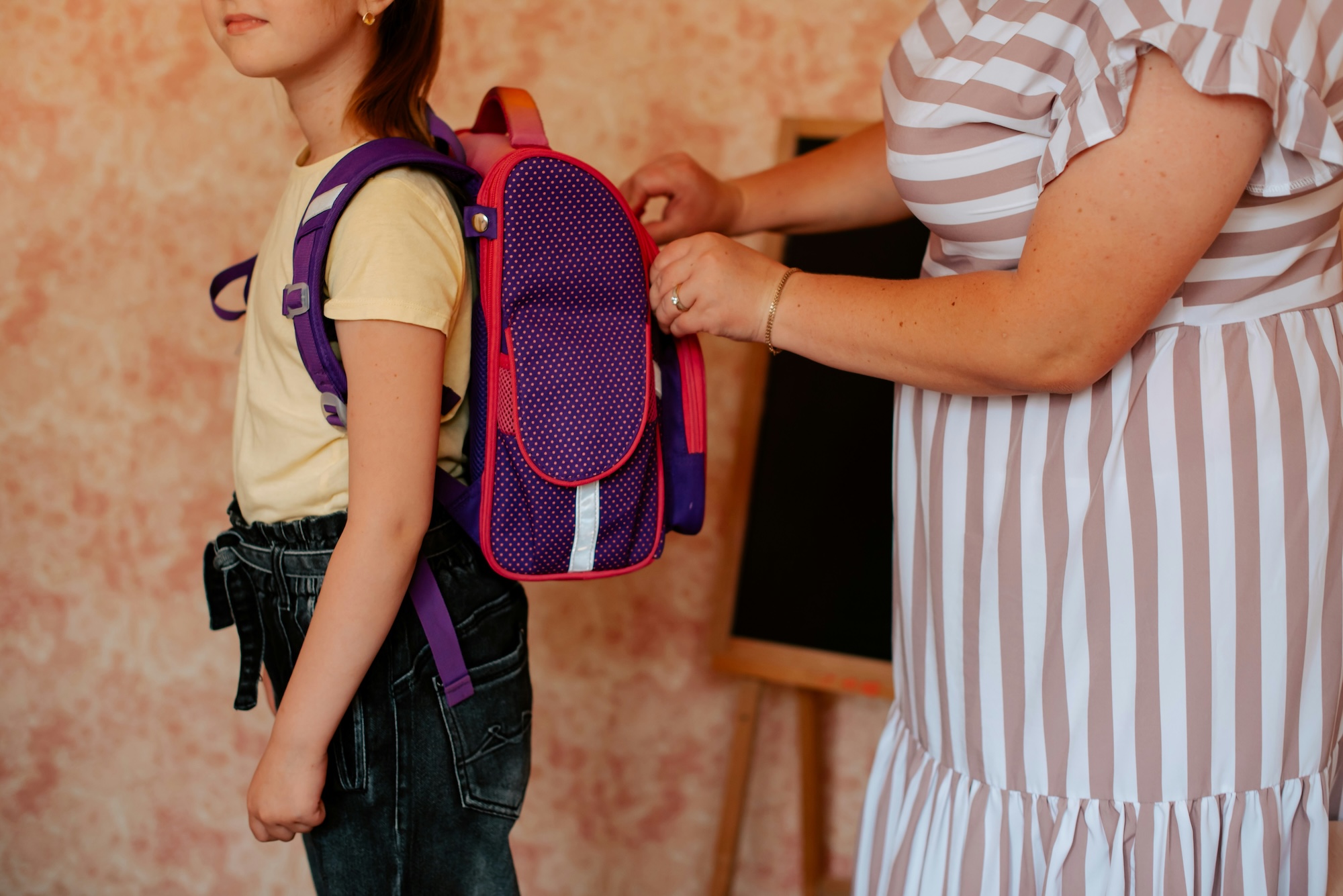
- Snug, not strangling. Tighten the straps until the bag sits close to the back with no gap. You should be able to slide a flat hand under each strap at the shoulder.
- Check the height. The bottom of the bag should sit at or just above the waist, no more than about 5 cm below it. A bag bouncing off the bum means the straps are too loose.
- Top of the bag near the shoulders. It shouldn't ride up past the top of the shoulders or tip your child forward.
Use the Extra Straps
If the bag has a chest strap or hip belt, use them. A chest strap keeps the shoulder straps from sliding outward. A hip belt shifts part of the load from the shoulders onto the pelvis, which is built for carrying weight. Many kids never click these in, so a quick reminder at the door helps.
Pack Smarter
- Heaviest items closest to the back. Textbooks and laptops go in the compartment nearest the spine.
- Do a weekly clean-out. Old worksheets, three pencil cases and a forgotten gym shoe add up fast.
- Weigh it once. Pop the bag on the bathroom scale. If it's over 10 to 15 percent of your child's body weight, something comes out.
- Ask about a second set. Some schools will let students keep a textbook at home or use digital versions.
Offload Bigger Items with Assistive Tools
Some days are just heavy: project day, hockey gear, a musical instrument. Give the shoulders a break with:
- A rolling backpack for kids with long walks or lots of books (check your school allows them first)
- A separate tote or duffel for gym clothes, carried in the opposite hand to balance the load
- A small cart or folding wagon for big projects or instrument cases
- School lockers and cubbies, used between classes so the bag isn't carried all day
Choose the Right Bag
Look for padded, wide shoulder straps, a padded back panel, multiple compartments to spread weight, and a size that matches your child's torso. A bag that fits a Grade 8 student is probably too big for a Grade 2 student.
Screen Time and Posture: Breaks and Movement Snacks for Kids
Screens are part of school, homework and downtime, so banning them isn't realistic (and good luck with that negotiation). A better goal is to break up long stretches of stillness.
Try the 20-20-20 Rule
Every 20 minutes, look at something 20 feet away for 20 seconds. It gives the eyes a rest, and while your child is looking up, the neck and shoulders get a reset too. A simple timer on the tablet makes this easy to remember.
Serve Up Movement Snacks
A movement snack is a quick burst of activity, 30 seconds to 2 minutes, sprinkled between screen sessions or homework chunks. Aim for one every 20 to 30 minutes. Here are some family favourites:
- Chin tucks: Gently glide the chin straight back, making a "double chin." Hold 3 seconds, repeat 5 times.
- Shoulder blade squeezes: Pull the shoulder blades back and down like you're tucking them into your back pockets. Hold 3 seconds, repeat 8 times.
- Doorway chest stretch: Place forearms on a door frame and step through gently. Hold 20 seconds.
- Cat-cow: On hands and knees, slowly round and arch the back 8 times.
- Superhero pose: Lie on the tummy and lift arms and legs off the floor like you're flying. Hold 5 seconds, repeat 5 times.
- Dance break: One favourite song, full volume, no rules. Silly counts.
Set Up a Friendlier Screen Station
- Raise the screen closer to eye level with a stand or a stack of books
- Feet flat on the floor or on a footrest
- Mix it up: lying on the tummy, sitting on the floor or standing at the counter all count as healthy variety
- Device-free zones at meals and in the car create natural breaks without a fight
When to See a Pediatric Physiotherapist in Ottawa
Most everyday aches settle quickly once the load gets lighter and your child moves more. It's worth booking an assessment if you notice:
- Back, neck or shoulder pain that lasts more than a week or two
- Pain that wakes your child at night
- Numbness, tingling or weakness in the arms or legs
- One shoulder or hip that looks consistently higher than the other
- Your child avoiding sports or activities they usually love
- Frequent headaches after school or screen time
Quick Recap: Preventing Backpack Back Pain in Kids
- Keep the loaded backpack at 10 to 15 percent of body weight
- Both straps, snug, with the bag sitting at the waist
- Use the chest strap and hip belt, and pack heavy items closest to the back
- Offload big items with rolling bags, totes, carts and lockers
- Break up screen time with the 20-20-20 rule and movement snacks
- Build strength with 60 minutes of active play a day
Remember, there's no need to panic about posture. Small, consistent changes add up to big results, and kids adapt beautifully when given the chance.




.svg)